
How are Food Hygiene Ratings Calculated?

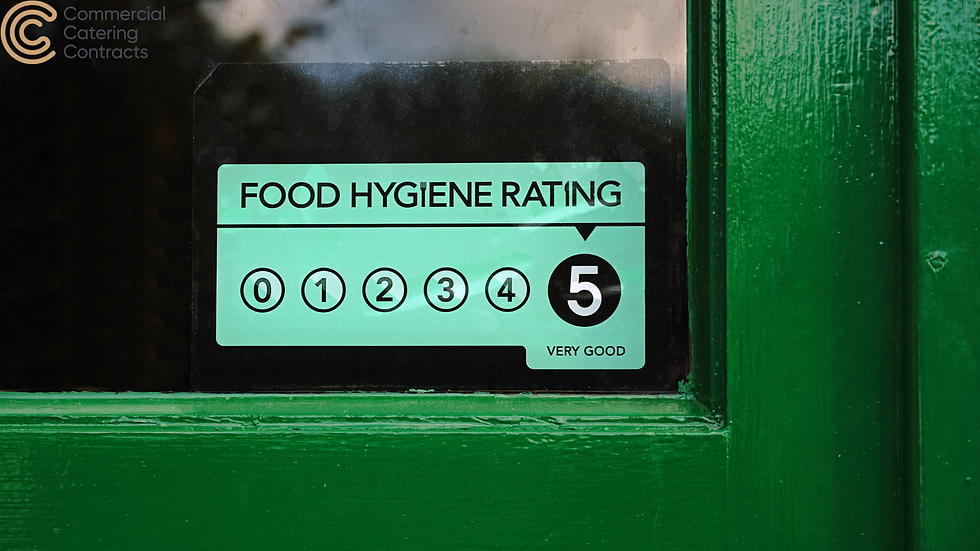
You’ve probably seen stories in the local news at some point about restaurants getting 0-star food hygiene ratings. Yet as much as you might avoid these restaurants, few people stop to think about how food hygiene ratings are calculated. And what exactly differentiates a “4” from a “5” might be as alien to some restaurant owners as it is to their customers.
Thankfully, we have a very good idea of what inspectors look for when performing hygiene ratings. Here’s everything you need to know about how food hygiene ratings are calculated, why they are important in protecting the public, and how you can make sure your restaurant or food business gets the best possible score.
What is the Food Hygiene Rating Scheme (FHRS)?
The Food Hygiene Rating Scheme (FHRS) is a national system run by the Food Standards Agency (FSA) in partnership with local authorities across England, Wales and Northern Ireland. While the FSA sets the standards for food hygiene, the actual inspections and enforcement are carried out by local authorities such as district or city councils.
The purpose of the FHRS is two-fold. Chiefly, it exists to inform and protect the public by giving them a reliable metric of how hygienic food businesses are, allowing them to make more informed decisions about where they eat. However, it also exists to help restaurant owners meet these standards, and identify areas where food safety can be improved.
What do the different food hygiene ratings mean?
Food hygiene ratings operate on a scale from 0 to 5, where:
5 – Very good
4 – Good
3 – Generally satisfactory
2 – Some improvement necessary
1 – Major improvement necessary
0 – Urgent improvement necessary
The ratings are applied when premises are inspected by a Food Safety Officer or Environmental Health Officer from the local authority. These inspections tend to be unannounced, ensuring that businesses can’t prepare for them by doing more thorough cleaning or preparation than they would exhibit on a regular day.
Ratings are given based on three key criteria:
Food handling & hygiene
This assesses whether food is prepared, cooked, re-heated, cooled and stored safely. It will also involve assessment of cross-contamination procedures; equipment cleanliness; and staff hygiene practices, such as regular handwashing and the use of appropriate clothing.
Structural condition of the premises
This assesses the contribution of the layout, lighting, ventilation, and surfaces (walls, floors, counters etc) to food safety. Other areas assessed under this category include pest control, the condition of equipment, and the general maintenance of the property.
Management & control systems
This assesses the effectiveness of the business’ organisation in regards to food safety, including documentation and record-keeping, training, use of food management systems such as HACCP, histories of compliance, and how confident the inspector is that standards will be maintained.
Each of these three areas is assigned a numerical score, with food safety & hygiene and structural conditions ranging from 0 to 25, and management & control ranging from 0 to 30. Lower scores indicate fewer or less serious issues, with the worst possible score (requiring maximum intervention) being 80.
Does a low score mean a high food hygiene rating?
Not necessarily. While your total score is mapped to a rating from 0-5, if any one of the three area scores is too high, it may stop you getting a higher rating, even if the total score suggests that you should. For example, if you implement high food safety standards but fail to document any of the measures you’ve taken, you will struggle to achieve top marks.
To get a rating of 5 (Very Good), you generally need both a very low total score and for none of the individual area scores to exceed a certain threshold. In many council areas, this means having each of the three areas score 5 points or less. The exact ratings thresholds tend to differ from council to council, but are usually available for you to view online.
How can I achieve a good food hygiene rating?
There is no ‘one size fits all’ solution to ensure you get a good food hygiene rating, as the exact measures you need to take will depend on the nature of your business and premises. That said, there are some key areas which you will be more heavily penalised for.
One of the most common and severe issues is temperature control, where inadequate cooling, improper reheating, or unsafe storage of high-risk foods increases the risk of foodborne pathogens. Food safety training will help to build a better understanding of these issues and which foods carry the highest risk, while newer or more capable refrigeration equipment will help to store food more safely.
Another basic but critical issue is cleanliness. While surfaces might be cleaned, if the surrounding environment isn’t, bacteria can easily be transferred to equipment when dropped, for instance. Broken or damaged surfaces also allow bacteria to develop in cracks, resisting cleaning efforts. In the most severe cases, unclean premises can cause pest infestations which put food and staff at risk.
Another parallel issue is cross contamination. Raw meat being stored near or above cooked foods, poor equipment cleaning processes, bad storage conditions, or poor personal hygiene can all lead to clean equipment, surfaces, and cooked food being contaminated. Perhaps most importantly, all of these issues tend to stem from a lack of food safety systems, with no monitoring or testing of safety, leading to a piecemeal approach that puts people at risk.
How often do food hygiene inspections take place?
How often a business is inspected depends on its risk profile. Higher risk businesses (e.g. those handling raw meat, serving vulnerable consumers, or with complex food prep) will be inspected more frequently, meaning every 6 months or so on average. Lower risk ones might be inspected once every two years or more, but this will depend on the local authority.
If you have received a poor food hygiene rating, all is not lost. Businesses can request a re-rating inspection after making sufficient improvements, in the hope of improving their rating and providing reassurance to customers. The new inspection will be carried out similarly to a routine one, with no set date or time to prevent you from gaming the system.
Getting your food hygiene rating results
Once the inspection is done, the business will typically be notified in writing of their rating within 14 days. The rating will also be published on the FSA’s ratings website for everyone to see (it is a public resource, after all!).
Your premises are given a sticker to display the rating, which is mandatory in Wales and Northern Ireland, but only encouraged in England. While some customers may not be aware of this, not displaying your food hygiene rating may make some people suspicious, even if you got a good rating.
Does a bad food hygiene rating mean unsafe food?
Not necessarily. Sometimes people go to a restaurant and love the food, then find out later that it has a poor rating; or go to a restaurant with a high rating and have a bad experience. The food hygiene rating isn’t a guarantee of a certain safety or quality of food, but a snapshot of the business’ safety practices at a specific point in time.
Some issues for instance may be intermittent, such as pests or malfunctioning equipment. These could cause a low rating upon initial inspection, but be quickly rectified. You may visit a restaurant with a poor rating that has made changes to fix its issues, but before it has received a new rating. Some types of food businesses also have higher risks than others, and are subjected to higher standards as a result.
However, a low food rating is generally a sign of issues within a business. There is no reason other than ignorance to not have comprehensive food safety systems in place, and these should by definition mean that the right processes are in place to ensure food safety. A low rating is a sign that something has gone wrong in the application of safety processes, and may hint at poor attitudes to safety, by previous owners or by present ones.
–
Food hygiene ratings in the UK are designed to be transparent, consistent, and to protect public health. Understanding how they are calculated helps both consumers make informed choices, and businesses know where to focus their efforts in improving food safety.
Ensuring effective food safety can mean revamping your kitchen surfaces, equipment, and other aspects of your food safety systems. Contact us today to discuss your kitchen design needs, or browse our website to learn more about the services and equipment we offer.

